News:
Arjun Raj Is Appointed to BE Faculty
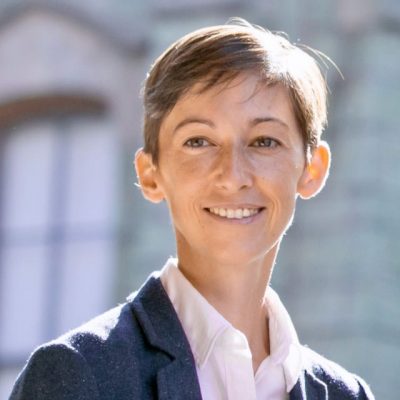
Arjun Raj did his undergraduate studies at the University of California, Berkeley, in mathematics and physics, and did his PhD in mathematics under Charles Peskin at the Courant Institute of New York University in conjunction with Sanjay Tyagi of the Public Health Research Institute. Somewhere during his PhD, he became very interested in the new field of systems biology, and during a summer of working in Sanjay’s lab, he unearthed a hidden love for experimental molecular biology. He is especially interested in the development and application of cutting-edge experimental methods to generate the quantitative data required to test models of biological function, particularly on the level of individual cells.
During his postdoc at MIT, he became interested in studying the process of development, by which a single cell grows and divides, ultimately becoming a multicellular organism. Such work may have implications for many disease processes, including developmental abnormalities and cancer.
Susan Margulies Named BMES Fellow
Professor Susan Margulies has been named a Fellow of the Biomedical Engineering Society for her national and international contributions to Biomedical Engineering and for inspired leadership in BMES. Fellowship is conferred by the Board of Directors to Society members who demonstrate exceptional achievements and experience in the field of biomedical engineering, and a record of membership and participation in the Society. Dr. Margulies's research goal is to determine functional and structural injury thresholds in the brain and lung, and use them to understand mechanisms of traumatic brain and lung injury.
Paul Ducheyne's Team Is Awarded Technology Funds
Dr. Paul Ducheyne’s team at the University of Pennsylvania is one of three funded technologies that has been awarded $100,000 from the University City Science Center’s QED Program, a $100,000 match from their supporting institution, and business advice for one year. The new program was created to fill the gap between research grants and commercial seed investment. Ducheyne’s group is developing thin films for reducing bacterial infection via external bone fixator pins. If successful, the films would reduce the high complication rates that are observed when compound fractures are repaired using external fixation.
Faculty, Students Receive Awards
at June ASME Meeting
At mid-June events at a recent ASME meeting, Penn's bioengineering students and faculty had great representation. Some highlights:
BE undergraduate and graduate students gave a total of six poster and seven podium presentations from six different PIs (Jason Burdick, Dawn
Elliott, Rob Mauck, Steve Nicoll, Lou Soslowsky and Beth Winkelstein).
In addition to Rob Mauck's receiving the YC Fung Award and Susan
Margulies being inducted as an ASME-BED Fellow, our students received
many awards. Kiersten Craig (3rd Place, Solid Mechanics) and Ashwin
Nathan (1st Place, Tissue & Cell Mechanics) were recognized in the
Bachelors Level Poster Competition. Mike Dishowitz (3rd Place, Tissue & Cell Mechanics) and Lara Ionescu (2nd Place, Tissue & Cell Mechanics)
were recognized in the Masters Level Poster Competition and Cindy Chung placed 3rd (Tissue & Cell Mechanics) in the Ph.D. Podium Competition. Dawn Elliott was the program chair for this year's meeting and was
elected to the bioengineering division executive committee for a three-year term.
Scientists Use RNA to Change
One Cell Type into Another
New collaborative research at Penn, published online in May 2009 in the Proceedings of the National Academy of Sciences, may lead to a new type of cell-based therapy for neurodegenerative and other diseases. 
James Eberwine (pharmacology), Junhyong Kim (biology), and Jai-Yoon-Sul (pharmacology) recently teamed up with colleagues from multiple disciplines—David Meaney (bioengineering), Vijay Kumar and David Cappelleri (MEAM), Miler Lee (biology) and additional pharmacology department contributors: Chia-wen Wu, Fanyi Zeng, Jeanine Jochems, Tae Kyung Kim, Tina Peritz, Peter Buckley, and Minsun Kim—to use RNA (mRNA) to change one cell type into another.
This is a breakthrough, which “overturns the notion that all cells are permanently hardwired with little ability to change their physiology,” says Jai-Yoon Sul. To read more, go to http://www.upenn.edu/researchatpenn/article.php?1597&sci
Summer 2009 Highlights
Jason Burdick was selected as one of 100 of the nation's brightest young
engineers to participate in National Academy of Engineering's (NAE)
annual U.S. Frontiers of Engineering Symposium.
http://www8.nationalacademies.org/onpinews/newsitem.aspx?RecordID=06252009b
Brian Litt was featured in the July 15th issue of U.S. News and World Report's "Brain Stimulation: Can Magnetic or Electrical Pulses Help You?"http://health.usnews.com/articles/health/brain-and-behavior/2009/07/15/brain-stimulation-can-magnetic-or-electrical-pulses-help-you.html
Scott Diamond was profiled in the June 17th BioTechniques.com for his leadership in founding the Penn Center for Molecular Discovery and demonstrated success in working across the engineering and biological disciplines.http://www.biotechniques.com/BiotechniquesJournal/2009/May/Interdisciplinary-Success-Profile-of-Scott-Diamond/biotechniques-142351.html
Some recent publications of interest:
J.A. Burdick. Bioengineering: cellular control in two clicks. Nature 460, 469 (2009).http://dx.doi.org/10.1016/j.bpj.2008.11.032
D.E. Discher, D.J. Mooney and P.W. Zandstra. Growth factors, matrices, and forces combine and control stem cells. Science 324, 1673 (2009). http://dx.doi.org/10.1186/1755-8794-2-27
A. Alu and N. Engheta. Cloaking a sensor. Phys. Rev Lett. 102, 233901 (2009) http://scitation.aip.org/getabs/servlet/GetabsServlet?prog=normal&id=PRLTAO000102000023233901000001&idtype=cvips&gifs=yes
April 2009: Jason Burdick and Robert Mauck share two NIH R01awards as dual principal investigators: "Engineering Developmental Microenvironments: Cartilage Formation and Maturation, 4/09-2/13; and "Dynamic Fibrous Scaffolds for Engineering Dense Connective Tissues," 4/09-3/14.
Spring 2009: Susan Margulies has been awarded the Ford Motor Company Award for Faculty Advising for 2009. The award recognizes dedication to helping students realize their educational, career, and personal goals.
December 1, 2008: Graduate students in Beth Winkelstein's lab, Dan Hubbard and Kyle Quinn, are the joint recipients of the Student Paper Award at the 52nd Stapp Car Crash Conference held in November, 2008. Bioengineering senior Joan Jose Martinez, was also a co-author on the paper entitled "The Role of Graded Nerve Root Compression on Axonal Damage, Neuropeptide Changes, and Pain-Related Behaviors."
September 15, 2008: Ravi Radhakrishnan BE/SEAS, David Eckmann Anesthesia/SOM, P. Ayyaswamy MEAM/SEAS, and Vladimir Muzykantov PHARMACOLOGY/SOM) received a four year R01 grant (1R01EB006818) from the NIBIB division of National Institutes of Health for $1,400,000 for the period 2008-2012. The grant will supportive a collaborative theoretical and experimental effort in the design of nanocarriers for targeted drug delivery. The theory, multiscale modeling, and simulations will be spearheaded in SEAS (Ravi Radhakrishnan, P. Ayyaswamy) and the experiments will be spearheaded in SOM (David Eckmann and Vladimir Muzykantov).
September 15, 2008: This past August, Ken Foster, Ph.D., Professor of Bioengineering, was interviewed by CBS-3, refuting the You Tube video showing cell phones popping popcorn.
August 19, 2008: Department of Bioengineering researchers, Alexander A. Govyadinov and Vadim A. Markel, also of the Department of Radiology here at Penn, recently published a study in the Journal of Physical Review B which theorizes a way to increase the speed of pulses of light that bound across chains of tiny metal particles to well past the speed of light by altering the particle shape. Click here to see more on this ground-breaking resesearch.
Awards and Honors:
December 1, 2008: Jason A. Burdick, Ph.D., Wilf Family Term Assistant Professor of Bioengineering, has been selected to receive a National Science Foundation Career Award for his work “Spatially Controlled Cellular Behavior in 3D Hydrogels: An Integrated Research, Teaching, and Outreach Approach.”
September 16, 2008: Casim Sarkar, Ph.D., Assistant Professor of Bioengineering, has been awarded a Scientist Development Grant from the American Heart Association. According to the AHA, the 4 four-year grant entitled "Analysis and Engineering of Circuits Implicated in Cellular Differentiation" is "intended to support highly promising beginning scientists."
September 15, 2008:
Andrew Tsourkas, Ph.D., Assistant Professor of Bioengineering, has been selected to attend the 14th annual U.S. Frontiers of Engineering symposium in Albuquerque. Andrew is one of eighty-two of the nation's brightest young engineers taking part in the 2-day NAE-sponsored event that will highlight exceptional engineering research.
August 1, 2008: Jason A. Burdick, Ph.D., Wilf Family Term Assistant Professor of Bioengineering, has been selected to receive an Early Career Award from the Wallace H. Coulter Foundation for his work “Injectable and Biodegradable Elastomers to Alter Early Infarct Expansion.”
April 2, 2008: Ravi Radhakrishnan, Ph.D., Assistant Professor of Bioengineering, has received the HP Outstanding Junior Faculty Award.
The HP Outstanding Junior Faculty Award program provides $1,000 to each of fouroutstanding tenure-track junior faculty members to present their work in COMP symposia at ACS National Meetings. The Awards are designed to assist new faculty members in gaining visibility within the COMP community. Award certificates and $1,000 prizes will be presented at the COMP Poster session.
December 17, 2007: Steven B. Nicoll, Ph.D., Assistant Professor of Bioengineering, has been selected to receive a National Science Foundation Career Award for his work "Polysaccharide-Based Biohybrid Constructs for Engineering of Cartilaginous Tissue."
December 4, 2007: Paul Ducheyne, Ph.D., Professor of Bioengineering, has been selected to receive the 2008 C. William Hall Award. This prestigious award is specifically given to honor members of the Society For Biomaterials who have made a significant contribution to the Society and have an outstanding record in establishing, developing, maintaining, and promoting the objectives
and goals of the Society For Biomaterials.
December 3, 2007: Beth Winkestein, Ph.D., Associate Professor of Bioengineering, has been awarded a one year research grant from the Cervical Spine Research Society. The grant is entitled "Novel Imaging Approach Using 3D Stress MRI to Detect Altered Biomechanics in Patients with Evoked Neck Pain."
October 9, 2007: Jason Burdick, Ph.D.,
Wilf Family Term Assistant Professor of Bioengineering,
has been awarded the 2007 David & Lucille Packard Foundation Fellowship in Science and Engineering. Dr. Burdick is one of the "20 new promising scientific researchers" awarded this fellowship by the Foundation.
September, 2007: Susan S. Margulies, Ph.D., Professor of Bioengineering, received the 2007 Elizabeth W. Bingham Award from AWIS-PHL, the Philadelphia Chapter of the Association for Women in Science. The award is given every year to honor an outstanding scientist who has signficantly influenced the advancement of women in science.
|