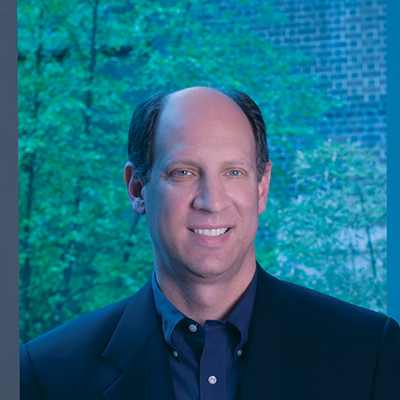
Louis
J. Soslowsky, Ph.D.
soslowsk@upenn.edu
Fairhill Professor of Orthopaedic
Surgery and Professor of Bioengineering; Director of Penn Center for Musculoskeletal Disorders, Vice Chair for Research; Member of the Institute for Medicine and Engineering
Ph.D., Engineering Mechanics
Columbia University, 1991
M.Phil., Columbia University,1989
M.S., Engineering Mechanics Columbia University, 1987
Research Interests
My research program covers a broad area related to orthopaedic biomechanics
and tissue engineering particularly related to soft connective tissues
and mechanics of joints through a series of multidisciplinary studies.
One main research area focuses on understanding the etiologic factors
and pathologic mechanisms associated with tendon and ligament injury,
healing, repair, and regeneration. In addition, fundamental structure-function
relationships for tendon and ligament are quantitatively evaluated.
A
variety of experimental animal models, including transgenic and
knockout mice, rats, and large animals are used to test various
hypotheses. Mathematical models are also utilized to further investigate
these
mechanisms and relationships. An additional focus area is related
to shoulder and elbow joint mechanics. These studies focus on relationships
between tissue strain fields and joint loading and arm positions
in both normal and abnormal states. Investigations concerning the
role of the joint capsule and related musculature are also included.
Selected Publications
1. Gimbel, J.A., Van Kleunen, J.P., Lake, S.P., Williams, G.R., and Soslowsky, L.J.: The role of repair tension on tendon to bone healing in an animal model of chronic rotator cuff tears. J Biomech, 40:561-568, 2007 (PMID 16600252).
2. Archambault, J.M., Jelinsky, S.A., Lake, S.P., Hill, A.A., Glaser, D.L. and Soslowsky, L.J.: Rat supraspinatus tendon expresses cartilage markers with overuse, J Orthop Res, 25:617-624, 2007 (PMID 17318892).
3. Gimbel, J.A., Van Kleunen, J.P., Williams, G.R., Thomopoulos, S., and Soslowsky, L.J.: Long durations of immobilization may be necessary to enhance the mechanical properties of the healing supraspinatus tendon. J Biomech Eng, 129:400-404, 2007 (PMID 17536907).
4. Perry, S.M., Van Kleunen, J.P., Ramsey, M.L., and Soslowsky, L.J. and Glaser, D.L.: Use of small intestine submucosa in an acute and chronic rotator cuff tear rat model. J Shoulder Elbow Surg, 16:179S-183S, 2007 (PMID 17629508).
5. Wuergler-Hauri, C.C., Dourte, L.M., Baradet, T.C., Williams, G.R., and Soslowsky, L.J.: Temporal expression of eight growth factors in tendon to bone healing in a rat supraspinatus model. J Shoulder Elbow Surg, 16:198S-203S, 2007 (PMID 17903711).
6. Sarver, J.J., Peltz, C.D., Dourte, L., Reddy, S., Williams, G.R., and Soslowsky, L.J.: The increase in stiffness but not the loss in range of motion following rotator cuff repair increased transiently for immobilized shoulders in a rat model. J Shoulder Elbow, Surg, 17:108S-113S, 2008 (PMID 18201650).
7. Gordon, A., Kozin, E.D., Keswani, S.G., Vaikunth, S.S., Katz, A.B., Zoltick, P.W., Favata, M., Radu, A.P., Soslowsky, L.J., Herlyn, M., Crombleholme, T.M.: Permissive environment in postnatal wounds induced by adenoviral-mediated overexpression of the anti-inflammatory cytokine interleukin-10 prevents scar formation. Wound Repair and Regen, 16:70-79 2008 (PMID 18086289).
8. Jelinsky, S.A., Lake, S.P., Archambault, J.M., and Soslowsky, L.J.: Gene expression in rat supraspinatus tendon recovers from overuse with rest. Clin Orthop Rel Res, 466:1612-1617, 2008 (PMID 18459028).
9. Perry, S.M., Getz, C.L., Soslowsky, L.J.: Following rotator cuff tears, the remaining (intact) tendons are mechanically altered. J Shoulder Elbow Surg, in press, 2008.
10. Ricchetti, E.T., Reddy, S.C., Ansorge, H.L., Zgonis, M.H., van Kleunen, J.P., Liechty, K.W., Soslowsky, L.J., Beredjiklian, P.K.: The effect of interleukin-10 (IL-10) overexpression on the properties of healing tendon. J Hand Surg, in press, 2008.
11. Peltz, C.D, Perry, S.M., Getz, C.L., Soslowsky, L.J.: Mechanical properties of the long-head of the biceps tendon are altered in the presence of rotator cuff tears in a rat model. J Orthop Res, in press, 2008.
Bioengineering
| Penn Engineering Home
| Penn Home |
City of Philadelphia
Faculty
& Staff |
Graduate Program |
Undergraduate Program |
Research
| Labs & Organizations
| Events
Course
Listings
|
BE Links
| Site Index |
Admission
| Employment
|