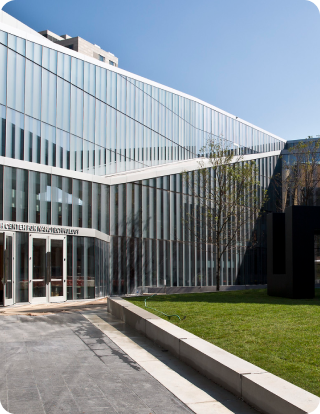
Areas of Concentration

Cell and Tissue Engineering
Biomedical Imaging
Biofluid Mechanics
Injury Biomechanics
Neuroengineering
Orthopaedic Bioengineering
Theoretical and Computational Bioengineering

Bioengineering Master's Program

Penn's Department of Bioengineering, one of the first in the nation, knows no boundaries. What distinguishes our program from those of our peers is our collaborative research environment that spans the University's Schools of Engineering, Medicine, Veterinary Medicine, Dental Medicine, and Arts and Sciences. Our Bioengineering program is consistently ranked as one of the best in the nation.

Bionengineering

Program Highlight: Access to resources available through Bioengineering’s thirteen research laboratories as well as affiliated laboratories on campus and in the Penn hospitals.

dividing line

The Master of Science in Engineering (MSE) Program in Bioengineering (BE) is innovative, unique, and nationally recognized for its excellence. We are at the fore in preparing students for leadership careers in which they will influence the direction of industrial, public, and non-profit organizations in solving problems important to biology and medical research as well as clinical, proactive, and population studies. Our flexible curriculum allows students to focus on an area of bioengineering that is of particular interest to them. Graduates of our program are in high demand in every field that requires advanced understanding of bioengineering principles. They are found in companies, organizations, and government agencies, or pursuing doctoral studies at Penn and other major universities.

The MSE Program, grounded in the intersection of engineering, life sciences, and medicine, provides students with the firm theoretical foundation and interdisciplinary skills that are essential for career advancement in the rapidly changing field of bioengineering. Applicants must have a strong background in Engineering and Biology.

Bioengineering MSE Curriculum

The program requires 10 graduate course units (CUs) and offers a master's thesis option and a non-thesis option.

  Thesis Option:


  Non-thesis Option:

1 Math course
1 Biological science course
2 Bioengineering graduate courses
3 SEAS and/or Biomedical Science Electives
1 general elective course from any science or engineering discipline
2 Master's Thesis Research Credits
  1 Math course
1 Biological science course
2 Bioengineering graduate courses
3 SEAS and/or Biomedical Science Electives
3 general elective courses from any science or engineering discipline

Students will focus on an area of bioengineering that interests them. The program director will be available to assist students plan their course of study and guide them to find a research mentor if applicable in the research that leads to their thesis if applicable and the successful completion of the program. It is expected that the requirements of the program be completed within twelve months.

For more detailed information, visit the Bioengineering MSE website.