Meet Our Directors

Insup Lee

Insup Lee

Director, PRECISE
Cecilia Fitler Moore Professor
Computer and Information Science (CIS)

Education: BS, University of North Carolina, Chapel Hill, 1977 Ph.D., University of Wisconsin, Madison, 1983

Insup’s research interests are in real-time, embedded, and cyber physical systems, which increasingly affect our daily lives. His research goals are to ensure and improve the correctness, safety, timeliness, trustworthiness, and compositionality of these systems. Insup has been developing techniques and tools for compositional real-time scheduling, model-based development, quantitative trust management, and run-time verification. He has also been transitioning his research results into practice by applying them to safety-critical embedded systems and high-confidence medical device systems.

Links: Email| Publications | Full Profile

Kostas Daniilidis

Kostas Daniilidis

Director, GRASP
Associate Professor
Computer and Information Science (CIS)

Education: 1992 Ph.D. in Computer Science, University of Karlsruhe 1989 MSE in Computer Science, University of Karlsruhe. 1986 MSE in Electrical Engineering, National Technical University of Athens.

Kostas's research interests are in computer vision and robotic perception. His research addresses challenges in the perception of motion and space, such as the geometric design of cameras, and the interplay of geometry and appearance in perception tasks. Kostas's research gives solutions to perceptual tasks such as panoramic vision, localization, perception of self-motion, large-scale mapping, visual location recognition, 3D object recognition, and vision-based flocking. Applications of his research involve robot navigation, tele-immersion, and image and shape retrieval.

Links: Email| CIS Webpage | Publications | Full Profile

Norman Badler

Norman Badler

Director, HMS
Professor
Computer and Information Science (CIS)

Education: Ph.D. in Computer Science, University of Toronto, 1975. MSc in Mathematics, University of Toronto, 1971. BA (with highest honors) in College of Creative Studies, emphasis in Mathematics; University of California, Santa Barbara, 1966-1970.

As director of the Center for Human Modeling and Simulation, Norm investigates computer graphics and artificial intelligence techniques and applications for embodied agents, virtual humans, and human-computer interaction. His major research directions include developing behavior-based animation of human movement for individuals and groups, constructing a parameterized action representation for real-time simulation and animation, and studying the relationship among human movement, natural language, and communication.  Norm’s crowd and populace simulation research incorporates environmental context and animates actors with roles and stochastic, scheduled, reactive, and opportunistic behaviors.

Links: Email| Personal Webpage | Publications | Full Profile

Centers and Institutes

Our interdisciplinary research centers and institutes span across all departments in Penn Engineering and foster collaborations across different schools throughout the university. The physical connectivity of engineering buildings and our proximity to each of the other schools enables exciting collaborations with faculty, students and postdocs in the Schools of Medicine, Arts and Sciences and Wharton Business School, just to name a few. From biotechnology and robotics, to computer animation and nanotechnology, Penn Engineering's centers and institutes are at the forefront of research on each scientific and technological frontier.

Jump to:
CECR | HMS | GRASP | IME | IRCS | LRSM | NBIC | PCBi| PCMD | Pennergy | PGFI | PRECISE | PRiML

Center for Engineering Cells and Regeneration (CECR)

CECR Chris Chen, Director
Cellular Engineering, Tissue Engineering, and Regenerative Medicine are all part of a new science that seeks to understand how cells, tissues, and organs undergo adaptive or maladaptive responses to stimuli whose effects may be beneficial (e.g., in natural or engineered nutritive microenvironments) or harmful (e.g. in aging, stress, or injury). This multidisciplinary center pushes the frontiers of our understanding of cells as control systems,  how the individual subcomponents can be  retooled to alter cell function, and how cells interact with each other and their microenvironment to form tissues. Learn more.
 

Center for Human Modeling and Simulation (HMS)

Norman I. Badler, Director
The Center for Human Modeling and Simulation exists to investigate computer graphics modeling and animation techniques for embodied agents, virtual humans, and their applications. Major foci involve developing behavior-based animation of human movement, especially for gesture, gait, and facial expression, constructing a parameterized action representation for real-time simulation and animation, and understanding the relationship between human movement, natural language, and communication. Learn more.
   

General Robotics, Automation, Sensing and Perception (GRASP) Lab

Kostas Daniilidis, Director
The General Robotics, Automation, Sensing and Perception (GRASP) Lab is a truly inter-disciplinary research center at the University of Pennsylvania. Founded in 1979, the lab has grown today to be one of the premier research centers focusing on fundamental research in robotics, vision, perception, control, automation and learning. Learn more.
   

Institute for Medicine and Engineering (IME)

Peter F. Davies, Director
The mission of the Institute for Medicine and Engineering (IME) is to stimulate fundamental research at the interface between biomedicine and engineering/physical/computational sciences leading to innovative applications in biomedical research and clinical practice. Learn more.
   

Institute for Research in Cognitive Science (IRCS)

John Trueswell, Director
The Institute for Research in Cognitive Science fosters the development of a science of the human mind through the interaction of investigators from the disclipines of Linguistics, Mathematical Logic, Philosophy, Psychology, Computer Science, and Neuroscience. Learn more.
   

Laboratory for Research on the Structure of Matter (LRSM)

Arjun G. Yodh, Director
The Laboratory for Research on the Structure of Matter (LRSM) is the intellectual focal point of materials research at Penn. It hosts the Materials Research Science & Engineering Center (MRSEC), which consists of five Interdisciplinary Research Groups (IRGs) plus selected seed projects. The MRSEC provides crucial support for faculty, postdoctoral fellows, and graduate students drawn from different disciplines, to tackle complex materials science projects that can only be addressed in a truly collaborative mode. Learn more.
   

Nano/Bio Interface Center (NBIC)

Dawn A. Bonnell, Director
The Nano/Bio Interface Center at the University of Pennsylvania is a Nanoscale Science and Engineering Center (NSEC) that exploits Penn's internationally recognized strengths in design of molecular function and quantification of individual molecules. The Center unites investigators to provide, not only new directions for the life sciences, but also for engineering in a two-way flow essential to fully realizing the benefits of nano-biotechnology...Learn more.
   

Penn Center for Bioinformatics (PCBi)

Maya Bucan and Lyle Ungar, Co-Directors
The Center for Bioinformatics focuses on research and education in the rapidly emerging fields of bioinformatics and computational biology, disciplines which deal with the analysis and management of data generated by high-throughput techniques in genomics, molecular and cellular biology. The ultimate goal of our collaborative research is to integrate all levels of information, including the genome sequence, the state of the cell (e.g., transcriptome and the proteome) and the phenotype. Learn more.
   

Penn Center for Molecular Discovery (PCMD)

Scott Diamond, Director
The Penn Center for Molecular Discovery (PCMD) is a multi-disciplinary center that screens small molecules from around the world in search of new, potentially useful biologically effective agents. The Penn Center for Molecular Discovery is housed within the Institute for Medicine and Engineering. Learn more.
   

Penn Center for Energy Innovation (Pennergy)

Cherie Kagan and Andrew Rappe, Co-Directors
The Penn Center for Energy Innovation (Pennergy) brings together world-class researchers to solve scientific and technological problems enabling the efficient use of current energy sources, the practical use of more sustainable energy, and the facile conversion of energy to different forms.  The Center researchers and educators integrate and share their knowledge through energy research, educational, and outreach activities that impact researchers, students, and our community. Learn more.


Penn Genome Frontiers Institute (PGFI)

James Eberwine and Junyhong Kim, Co-Directors
The Penn Genome Frontiers Institute (PGFI) is a university-wide institute dedicated to the advancement of the interdisciplinary field of genomics research. PGFI fosters collaborations and scientific exchange across biology, veterinary medicine, pharmacology, medicine, genetics, microbiology, engineering, physics, chemistry and psychology. Learn more.
   

Penn Research in Embedded Computing and Integrated Systems Engineering (PRECISE)

Insup Lee, Director
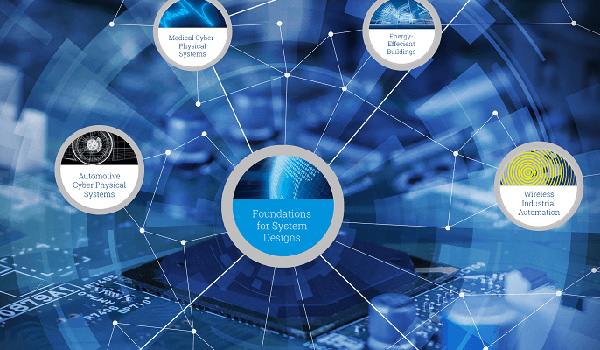
PRECISE is the point of convergence for several related research efforts by theaffiliated faculty in the areas of cyber-physical systems, distributed, real-time, and embedded systems, formal specification and verification, control theory, and trust management. Comprised of researchers from the departments of Computer and Information Science and Electrical and Systems Engineering, the center also collaborates closely with researchers in Robotics, Bioengineering, the School of Medicine, and Wharton. PRECISE research is being applied to several application domains, including embedded software-intensive medical devices, embedded software design and verification, wireless sensors, and robotics. Learn more.
   

Penn Research in Machine Learning (PRiML)

PRiML Ben Taskar and Sasha Rakhlin, Co- Directors
The need to analyze and make effective use of the vast amounts of data has made Machine Learning indispensable in many fields of science, medicine and engineering, as well as technology powering modern high-tech industry. Machine Learning addresses the fundamental problems of extracting models and patterns from data. PRiML's focus is on both theoretical and applied aspects of machine learning, especially dealing with fundamental challenges of large scale learning: high dimensionality, very large datasets, limited supervision, adversarial settings, structured outcome spaces.Learn more.

Jump to:
HMS | GRASP | IME | IRCS | LRSM | NBIC | PCBi | PCMD | Pennergy | PGFI | PRECISE | PRiML